Reservation homicide investigations’ systemic neglect
Day of the DeadReservation homicide investigations’ systemic neglect is presented not as a single investigative error but as a pattern: divided jurisdiction, inadequate resources, and unequal regard for Native victims and witnesses allowed Roseanne Orozco’s murder to remain unresolved. Through Brandon Walker’s recollections and the later efforts of Emma Orozco and Andrea Tashquinth, the novel shows how official inaction and dismissed testimony shaped what could be known about the case—and who was left to keep asking.
Jurisdiction and unequal attention
The investigation of Roseanne’s death took place within a divided system of authority. Although the precise murder site was never established, investigators assumed that she had died on the reservation and that another Native person was responsible. Under the arrangements described in the novel, cases involving Native people killing other Native people on Native land fell to either the Federal Bureau of Investigation or the local tribal police. By contrast, the murder of Gina Antone, which occurred just off the reservation and involved Anglo perpetrators, came under the Pima County Sheriff's Department. The location of a crime and the identities assigned to victim and suspect therefore helped determine which institutions would investigate it.
Brandon remembers that some people within the Federal Bureau of Investigation in the early 1970s held violently anti-Indian attitudes. More broadly, he recalls reservation homicide investigations as often cursory when the victim and suspected perpetrator were both Native. The Papago Tribal Police Force was called to Roseanne’s case, but its investigators lacked training, equipment, and money. The novel gives no account of those limitations being remedied; instead, their practical consequence is clear: the investigation produced no known resolution, and Roseanne’s family was left with unanswered questions.
A suspect, a witness, and a silenced family
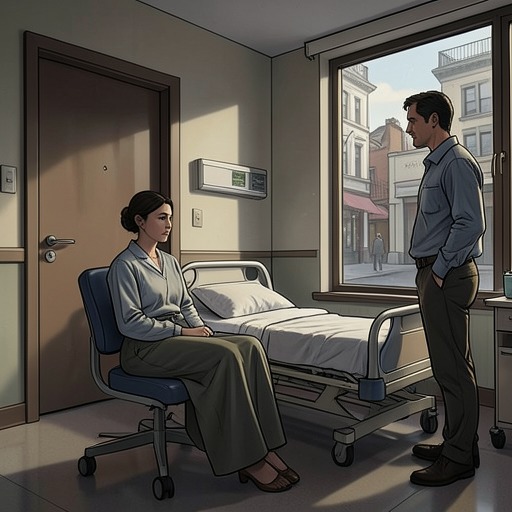
Roseanne’s father, Henry Orozco, was suspected by the local tribal police. That suspicion shaped how other information was received. Andrea, Roseanne’s older sister, says she tried to tell investigators that the hospital might be involved in Roseanne’s disappearance. She was sixteen, and no one took her view seriously. Her account also identifies a possible setting and sequence for the disappearance: Roseanne had been admitted to the Indian Health Service hospital for tests, and when Henry arrived to take her home after work, she was gone. The family was told, or came to believe, that she had left on her own; the following week, Roseanne was found dead in a cooler beside the road.
Andrea connects the loss of her sister to an earlier school experience. When Roseanne was four, she was frightened at school and separated from Andrea. After the principal took her away and shut her in a closet, she would not speak again. Her silence continued at home and at school, despite her parents taking her to doctors in the area and in Phoenix. This history matters to the investigation because it makes the family’s knowledge of Roseanne unusually dependent on observation and memory rather than her later testimony. It also clarifies the cost of treating a child’s distress as irrelevant: the silence that followed was not evidence that nothing had happened to her.
Memory, records, and renewed inquiry
Brandon did not investigate Roseanne’s murder at the time. He was working homicide for the Pima County Sheriff's Department, but the case was assigned elsewhere. Recently divorced, short of money, responsible for alimony and child-support payments, and helping his parents while his father’s health declined, he did not keep track of every case that briefly crossed his desk. His circumstances explain why he lost sight of the investigation without changing the larger institutional fact that Roseanne’s family received no answer.
Decades later, Emma approaches Brandon because she wants to know what happened to her daughter. Her husband had urged the family to put the past behind them, but after his death Emma decides to pursue the case. Brandon understands that asking direct questions can be considered impolite in the community, so he begins with an observation rather than a blunt demand. His attention to Emma’s reflection and to the way she grips her walker registers the effort involved in reopening a painful subject before a stranger. The investigation thus begins with a different practice of listening: Brandon makes room for Emma to speak, and her testimony becomes a source of direction rather than an obstacle to an already favored theory.
Andrea’s hospital lead prompts a search for Roseanne’s medical records. Brandon recalls that a state-university grant in the early 1990s digitized health records at the hospital in Sells, including records reaching back to the 1950s. Roseanne’s July 1970 appendectomy should therefore have been recorded. But the existence of a database does not ensure access to it: Brandon expects that a white investigator asking for old records might be refused. When Emma later reports that the hospital claimed to have no record of Roseanne, she contrasts that answer with the records it found for her own three hospital stays. The discrepancy strengthens her conviction that someone at the hospital was involved, though it does not by itself identify that person or establish what happened.
Recovery of evidence and its limits
The renewed inquiry also exposes a conflict between urgency and procedure. Emma and her family secretly exhume the remains of Roseanne’s baby after dark, rather than wait for permission from the Tohono O’odham Tribal Council. A court order would probably have been required, even with the grandmother’s consent. Their action gets the remains to Brandon, but compromises the chain of evidence. As a member of The Last Chance, he is caught between wanting to produce answers for a grieving family and preserving evidence that could support accountability in court. The episode shows how distrust and institutional delay can encourage families to act for themselves, while also creating legal and evidentiary difficulties for the investigation they hope to advance.
The novel’s later concern with fugitive suspects extends the problem of jurisdiction beyond reservation lines: Brandon fears that a suspect with connections in Mexico could evade capture across the border, and that extradition would be unavailable in a capital case. This is not the same failure as the original investigation, but it echoes its central vulnerability: formal authority does not guarantee that investigators can reach a suspect, obtain records, or secure usable evidence. Across these episodes, neglect operates through accumulated barriers rather than one dramatic refusal.
Significance
The case makes the consequences of unequal attention visible in both public records and private life. Roseanne’s death received too little sustained investigation, Andrea’s warning was discounted, and Emma had to return to an old loss decades later to insist that it mattered. Brandon’s own memory reveals how easily a case assigned to another agency could disappear from his professional awareness, while his later collaboration with the family offers a more attentive alternative without erasing the damage already done. The novel therefore treats renewed inquiry as necessary but not automatically sufficient: listening can recover leads and challenge an inherited suspicion, yet access, jurisdiction, permission, and evidentiary procedure still shape whether the truth can be established.